FAST FACTS:
Scientific name: Mandrillus sphinx
Population size: Unknown
Conservation status: Vulnerable
Habitat: Tropical rainforest
ALL ABOUT MANDRILLS:
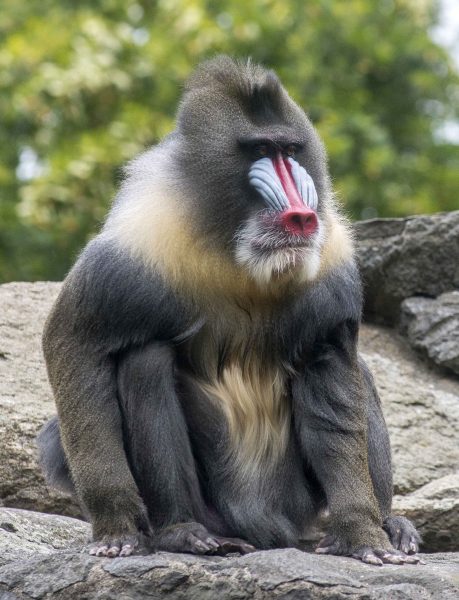
The mandrill is a primate of the Old World monkey (Cercopithecidae) family. Although they look superficially like baboons, they are more closely related to Cercocebus mangabeys and are the world’s largest monkeys. Mandrills are found in southern Cameroon, Gabon, Equatorial Guinea, and Congo. Mandrills mostly live in tropical rainforests. They live in very large groups. Mandrills have an omnivorous diet consisting mostly of fruits and insects.
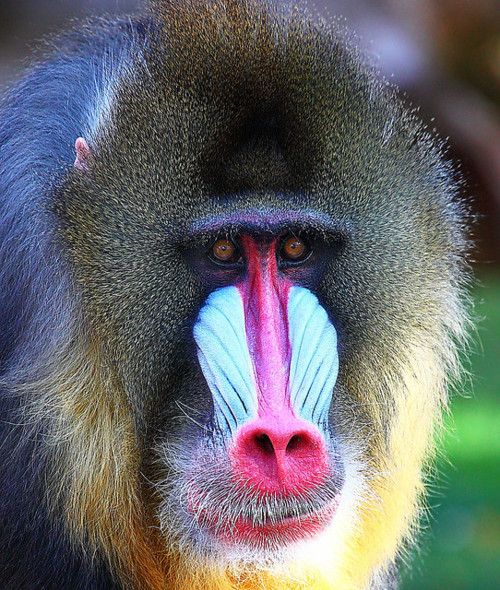
Mandrills are noted as being exceptionally colorful by mammalian standards. Charles Darwin wrote in The Descent of Man: “no other member in the whole class of mammals is colored in so extraordinary a manner as the adult male mandrill’s”. The bright colors of mandrills are indeed not produced conventionally (no mammal is known to have red and blue pigments), being derived from light refraction in facial collagen fibers.
CONSERVATION:
The mandrill is considered vulnerable and is affected by deforestation. However, hunting for bushmeat is the more direct threat. Mandrills are particularly threatened in the Republic of the Congo. Nevertheless, there have been captive-bred individuals that have been successfully reintroduced into the wild.